A cathodic protection system requires reliable measuring points to verify its performance throughout the life of the asset. Once anodes, cables and a power source are installed and buried, the test stations and junction boxes left above ground are the points at which an engineer confirms the structure is protected, adjusts the system and diagnoses faults. On a buried pipeline, these access points are not optional extras. They are how compliance with standards such as ISO 15589-1 is demonstrated across the asset’s life.
This guide explains the two most common cathodic protection test facilities used on UK pipelines: the M28 test post and the link control pillar (LCP). It covers what each does, what goes inside them, and how to choose between them.
What a test station does
A test station, also called a test post, is a permanent terminal that brings cables from the buried pipeline and the CP system up to an accessible point above ground. It allows an engineer to take measurements without excavating, and it is where the routine monitoring of a cathodic protection system is carried out. A permanent, durable test station simplifies the measurement of pipe-to-soil potentials, current flow, the testing of insulated flanges, resistance bonds and anode outputs.
Inside a test station, cables are terminated on brass bolts or terminal blocks. Depending on the function of the location, the enclosure may also house shunts for measuring current, resistors, bonds to other structures, or reed relay switches for coupon on and off switching. Space is often provided for remote monitoring data loggers, so a manual test point can be upgraded to continuous monitoring later.
The M28 test post
The M28 is the UK pipeline industry standard test post, used for test points, drain point connections and groundbed termination posts. Its format is long established and widely recognised across UK pipeline operators, which is part of its value: it is a known test station that fits standard facing plates and standard installation practice.
Construction and terminations
M28 posts are available in several constructions. The traditional concrete pattern is robust and heavy, while modern lightweight versions in glass reinforced concrete or recyclable polyethylene bring the unit within manual handling guidelines without sacrificing strength. A standard M28 typically provides up to four terminations on brass terminal bolts, with lightweight patterns offering an internal terminal rail for additional terminal blocks and space for resistors and shunts where required.
Features that aid installation and monitoring
Practical features distinguish a well-designed M28 post. Interchangeable face plates allow the same post to carry custom CP markings or to match field boundary markers. A moulded recess or housing allows remote logging equipment to be fitted. A rear cable tube lets buried CP cables be threaded through cleanly to a monitoring enclosure. These details matter on a large pipeline where hundreds of posts are installed and later monitored over decades.
The link control pillar (LCP)
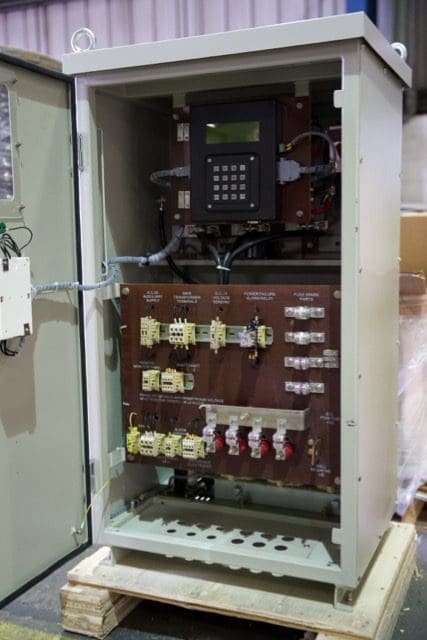
Where an M28 post handles routine test points, a link control pillar is the larger above-ground facility used at locations that need more than standard measurement. An LCP is a free-standing pillar or cabinet that houses the links, shunts, resistors and bonds required to control and adjust the cathodic protection system, not simply to read it.
LCPs are used at locations such as pipeline crossings, bonds between a protected pipeline and foreign structures, drainage points to impressed current groundbeds, and AC mitigation and earthing connections. The removable links allow a circuit to be isolated for testing, shunts allow current to be measured accurately, and resistors and bonds allow interference and drainage currents to be controlled. In effect, an LCP is the control point at which the behaviour of a section of the CP system can be set and verified.
M28 post or link control pillar: choosing the right facility
The choice follows the function the location has to perform:
| Facility | Primary function | Typical locations |
| M28 test post | Measurement and routine monitoring | Standard test points, drain points, groundbed termination |
| Link control pillar (LCP) | Control, bonding, drainage and adjustment | Crossings, foreign-structure bonds, AC mitigation, groundbed drainage |
Most pipelines use a combination of both, with M28 posts at the majority of monitoring locations and LCPs at the smaller number of points where the system must be controlled or bonded. Specifying the right mix at the design stage avoids the expense of upgrading a simple test post to a control facility later.
Part of a complete monitoring and accessory range
Test stations and link control pillars sit within a wider family of cathodic protection monitoring and accessory products. Corrpro Europe manufactures and supplies this complete range, including test stations, junction boxes, reference electrodes, grounding materials, insulation materials, coating products and cable connection materials, alongside the anodes, cables and power supplies that make up the rest of a CP system. Supplying the full range from one UK manufacturer means the test facilities, terminations and cabling are matched to one another and to the system design, with the short lead times that come from holding stock and manufacturing in-house.
Frequently asked questions
What is a cathodic protection test station?
A test station, or test post, is a permanent above-ground terminal that brings cables from a buried pipeline and its CP system to an accessible point. It lets an engineer measure pipe-to-soil potentials, current flow, insulated flanges, bonds and anode outputs without excavating, and it is where routine CP monitoring is carried out.
What is an M28 test post?
The M28 is the UK pipeline industry standard test post, used for test points, drain point connections and groundbed termination posts. It is available in concrete, glass reinforced concrete and lightweight polyethylene patterns, typically providing up to four terminations and space for shunts, resistors and remote monitoring equipment.
What is the difference between a test post and a link control pillar?
A test post, such as an M28, is primarily for measurement and routine monitoring. A link control pillar (LCP) is a larger facility that houses the links, shunts, resistors and bonds needed to control, bond, drain and adjust the CP system, used at crossings, foreign-structure bonds and drainage points rather than at every monitoring location.
Can a test station be fitted with remote monitoring?
Yes. Many test stations, including modern LCP posts, provide a housing or recess for remote monitoring data loggers and a cable route to connect them. This allows a manual test point to be upgraded to continuous remote monitoring without replacing the station.
To specify test stations, link control pillars or other CP monitoring materials, contact our team or explore our Cathodic Protection Materials range.